
The phrase "silent killer" has been used so often about hypertension that it has stopped meaning anything. It is worth restating literally. High blood pressure produces no reliable symptoms. You cannot feel it. There is no headache that signals it, no dizziness that confirms it, no sensation of your blood being under pressure. People walk around for a decade with readings that are damaging their arteries every hour and feel entirely well until the day they do not.
In Nigeria this matters more than almost anywhere. Hypertension is more common, tends to appear earlier, and tends to be more severe than in many other populations, and it is the leading cause of both stroke and kidney failure in this country.
What the numbers mean
A blood pressure reading has two numbers. The upper figure, systolic, is the pressure as the heart contracts. The lower figure, diastolic, is the pressure between beats when the heart is filling.
- Below 120 over 80 is optimal.
- 120 to 139 over 80 to 89 is raised, and is the stage where changes to salt, weight and activity are most effective.
- 140 to 159 over 90 to 99 is stage one hypertension.
- 160 over 100 and above is stage two hypertension.
- 180 over 110 and above requires urgent medical attention, particularly with chest pain, breathlessness, severe headache, visual disturbance or any neurological symptom.
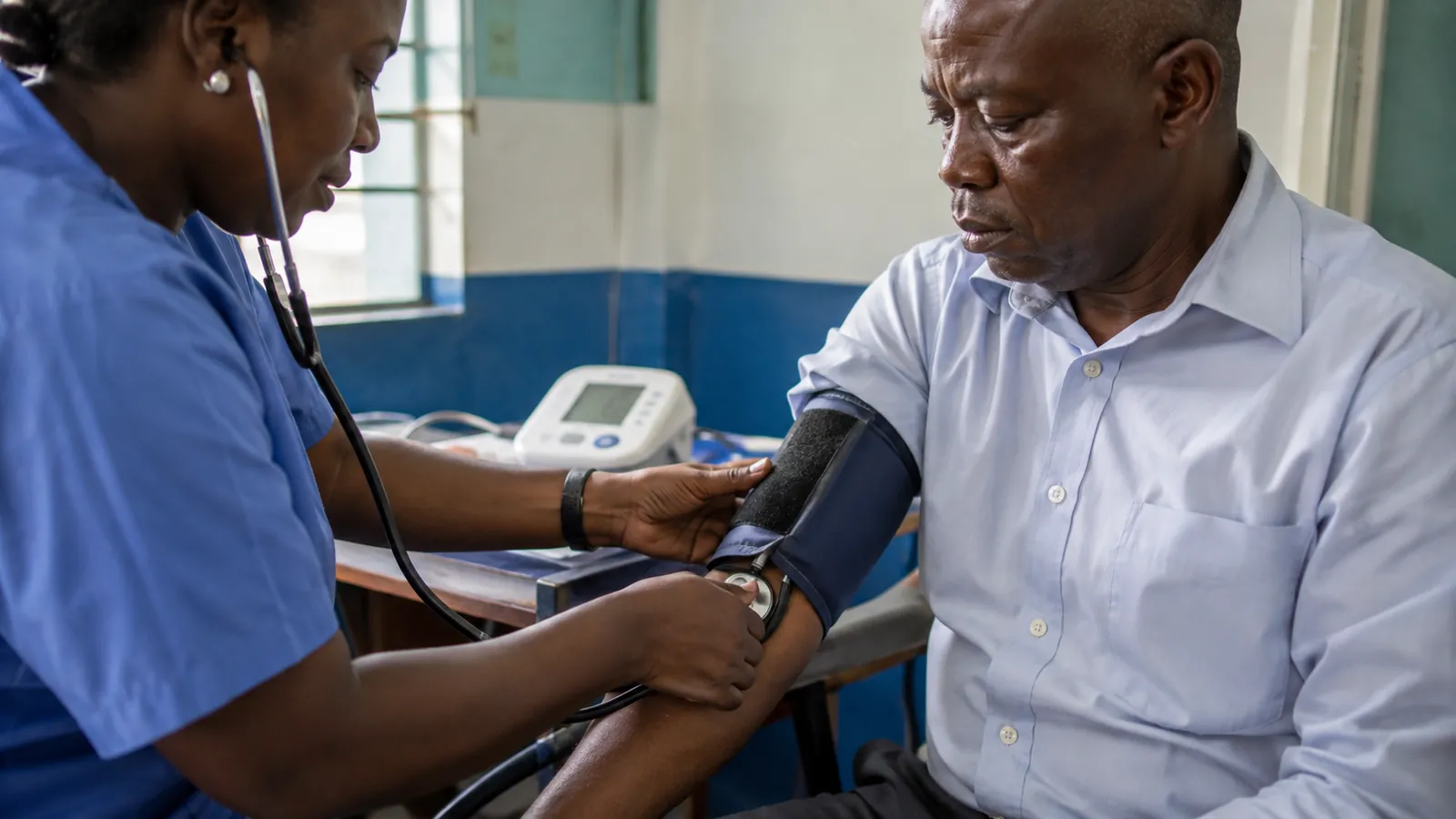
One high reading is not a diagnosis. Blood pressure rises with stress, pain, a full bladder, a cup of coffee and an argument in Lagos traffic. Diagnosis requires repeated measurements on separate occasions, taken properly: seated and rested for five minutes, back supported, feet flat, arm at heart level, and with a cuff that actually fits. A cuff too small for a large arm reads falsely high, and this is a routine source of wrong diagnoses.
What it damages before you notice
Pressure that stays high does mechanical damage to arteries throughout the body. The consequences are silent until they are catastrophic.
The brain. Hypertension is the dominant risk factor for stroke, and stroke in Nigeria tends to strike a decade earlier than in Western populations. It also causes the small vessel damage behind vascular dementia.
The heart. Pumping against high pressure thickens the heart muscle, which then stiffens and fails to fill properly. This is a leading route into heart failure. Hypertension also accelerates the coronary artery disease that causes heart attacks.
The kidneys. The kidney is a filter made of tiny blood vessels, and it is exquisitely vulnerable to pressure. Hypertension is the leading cause of chronic kidney disease and end stage kidney failure in Nigeria. Most people who arrive at dialysis with hypertensive kidney disease had no kidney symptoms at all until very late.
The eyes. The retina is the one place a doctor can see your arteries directly. Hypertensive retinopathy causes progressive visual loss, and the changes visible on examination are a good indicator of what is happening in vessels elsewhere.
Who should be checked, and how often
Every adult should know their blood pressure. From thirty, an annual check is reasonable for anyone with a normal reading. Check more often if you have a family history of hypertension or stroke, if you are overweight, if you have diabetes or kidney disease, if you smoke, or if you have ever had a raised reading.
Checking is quick and cheap and takes place at any consultation here. There is no good reason for a Nigerian adult to be unaware of their number.
The workup after diagnosis
Once hypertension is confirmed, the assessment does two things: it looks for damage already done, and it looks for a treatable underlying cause.
- Kidney function, urea, creatinine and estimated filtration rate
- Urinalysis for protein, which is often the first visible sign of kidney damage
- Electrolytes including potassium and sodium
- Fasting glucose or HbA1c, since diabetes and hypertension travel together
- Lipid profile
- Electrocardiogram, looking for thickening of the heart muscle
- Echocardiogram where indicated
- Examination of the retina
In most adults no single underlying cause is found, which is called essential hypertension. In a minority, particularly the young or those with very high or difficult to control readings, there is a specific cause such as kidney disease, hormonal disorder or narrowing of the renal arteries, and those are worth finding.
Salt, and the part of the conversation people dislike
Sodium reduction genuinely lowers blood pressure, and Nigerian diets carry a great deal of hidden sodium that has nothing to do with the salt cellar.
The main sources are seasoning cubes and powders, which are largely sodium; dried and smoked fish and crayfish; processed and tinned foods; instant noodle seasoning sachets; and bread. Reducing seasoning cubes alone often produces a measurable change within weeks. Food tastes flat at first and the palate adjusts within about a month, which is worth knowing before you decide it is impossible.
Alongside salt: weight reduction, which lowers pressure reliably; regular physical activity of around 150 minutes a week; limiting alcohol; stopping smoking, which does not lower blood pressure directly but multiplies the cardiovascular risk that high pressure is already creating; and increasing potassium rich foods such as bananas, oranges, tomatoes, beans and leafy vegetables, unless you have kidney disease, in which case take specific advice first.
Medication, and the mistake almost everyone makes
Most people with confirmed hypertension need medication, often more than one, because different classes work on different mechanisms and combining them at moderate doses works better with fewer side effects than pushing one drug to its maximum.
Here is the mistake. Someone starts treatment, their reading normalises, they feel well, and they conclude they are cured and stop. The pressure returns within days or weeks, usually without any symptom to signal it, and the damage resumes silently.
A normal reading on treatment is evidence that the treatment is working. It is not evidence that the treatment is no longer needed. For the large majority of people, hypertension is a lifelong condition and the medication is lifelong too. Any change should be made by your doctor, not by you and not by a chemist.
If a medication is causing a side effect, and some do, a dry cough with certain classes or ankle swelling with others, tell your doctor. There are several classes and something will suit you. Stopping quietly and saying nothing is the worst of all the options.
Measuring at home
A home monitor is a good investment. Buy a validated upper arm device rather than a wrist one, check that the cuff fits your arm, and measure at the same times each day, sitting and rested. Record the readings and bring them to your review. Home readings taken over a week tell your doctor far more than a single measurement taken in a clinic where you have just climbed a flight of stairs.
Do not adjust your own medication in response to a home reading. Bring the pattern to your doctor and let the dose be changed on the basis of the whole picture.
If this describes your situation
Book a consultation at Magodo and bring previous results, scans and a current medication list where relevant. The hospital is open 24 hours.