
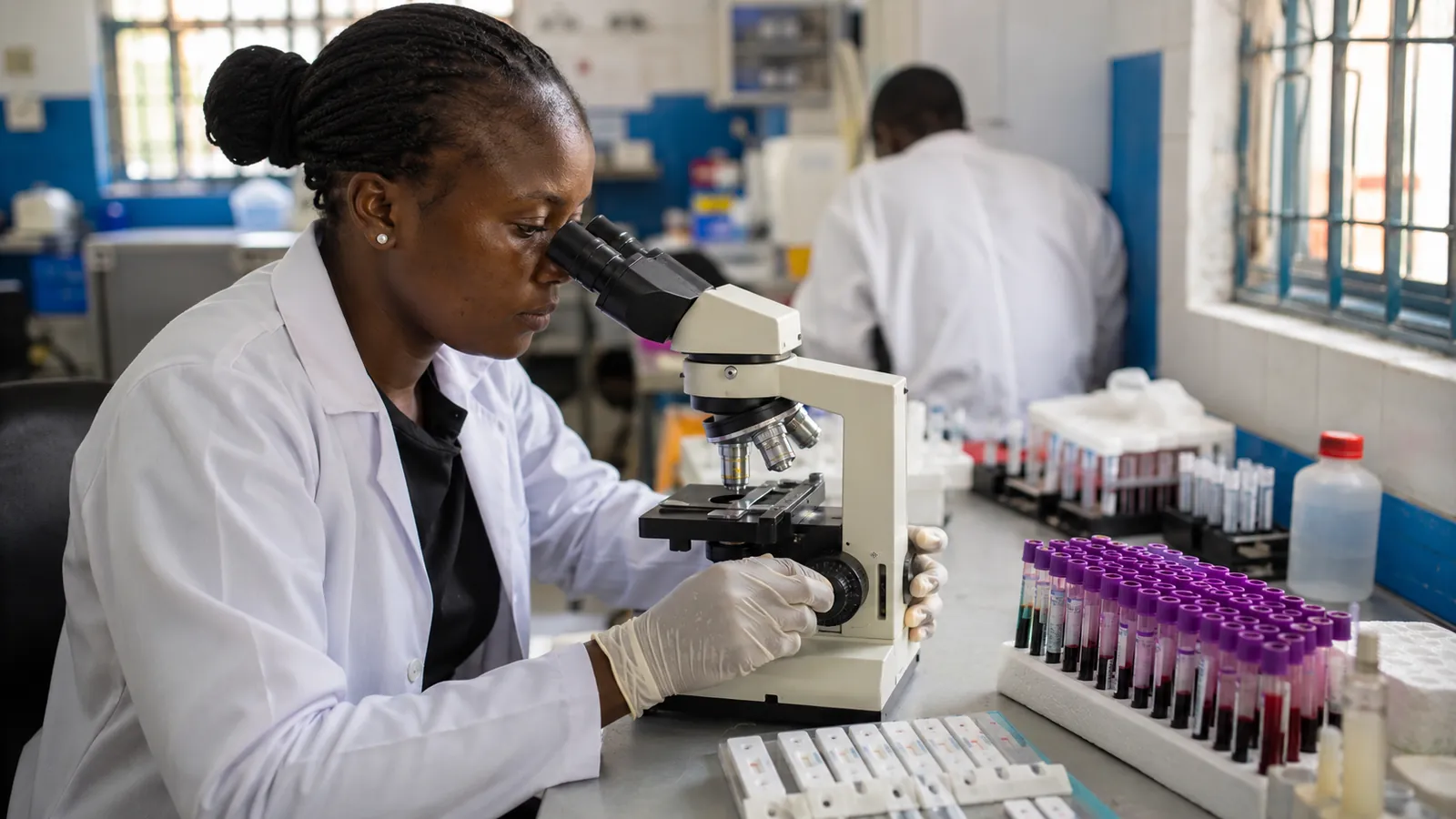
Walk into a great many places in Lagos with a fever and you will leave with a diagnosis of malaria, typhoid, or both, and a bag of medication for each. It is so routine that "malaria and typhoid" has become a single phrase. Frequently it is wrong, and the consequences are more than academic: the actual illness goes untreated, and antibiotics get used for nothing, which is exactly how resistance is built.
Here is what is really happening, and what a properly investigated fever looks like.
Why the two get conflated
Malaria and typhoid genuinely do overlap. Both produce fever, headache, body aches, weakness and loss of appetite. Both are common in Nigeria. Both can present without anything that clearly distinguishes them at the bedside.
They are, however, completely different diseases. Malaria is a parasite transmitted by mosquitoes. Typhoid is a bacterial infection, salmonella typhi, transmitted through contaminated food and water. They require entirely different treatments, and treating one when you have the other means the illness continues.
The Widal test problem
The Widal test is the reason so many Nigerians are told they have typhoid. It is cheap, it is available everywhere, and in an endemic population it is close to useless as a standalone diagnostic.
The test detects antibodies against salmonella. The difficulty is that in a country where exposure to salmonella is widespread, a very large proportion of healthy people carry those antibodies from previous exposure. A positive Widal therefore frequently reflects something your immune system saw years ago rather than an infection you have now.
It is also affected by previous typhoid vaccination, by other salmonella infections, and by variation between laboratories in how titres are read. A single Widal result, taken during an acute fever, cannot reliably distinguish current typhoid from a lifetime of background exposure. Blood culture is the definitive test. It grows the organism itself, and if it grows salmonella typhi you have typhoid, full stop. It takes 48 to 72 hours because the bacteria have to multiply before they can be identified, and that wait is precisely why so many people are treated on a Widal result instead.
Testing for malaria properly
Malaria testing is considerably more reliable, and there is no acceptable reason to treat malaria without a test.
The rapid diagnostic test detects malaria antigen from a finger prick and gives a result in about fifteen minutes. It is accurate for the common species. One caveat worth knowing: some antigens persist for a few weeks after successful treatment, so a positive test shortly after a recently treated episode may reflect the old infection rather than a new one.
The blood film, examined under a microscope, remains the reference standard. It confirms the presence of parasites, identifies the species, and quantifies the parasite density, which tells the clinician how severe the infection is. It requires a competent microscopist, which is why quality of laboratory matters.
The World Health Organization position, adopted into Nigerian national guidelines, is unambiguous: test before treating. Presumptive treatment wastes medication on people who do not have malaria, delays the real diagnosis, and drives resistance to artemisinin based therapies, which are the drugs currently keeping malaria treatable.
What else causes fever in Lagos
When both malaria and typhoid are excluded, the list of things that were causing the fever all along is long and entirely ordinary.
- Urinary tract infection, very often missed, and detected by a urinalysis costing very little
- Pneumonia and other lower respiratory infection
- Viral illnesses including influenza and dengue
- Tonsillitis and other upper respiratory infection
- Skin and soft tissue infection, sometimes from a wound the patient has forgotten
- Gastroenteritis
- Hepatitis
- Pelvic inflammatory disease
- Non infectious causes including some medications and inflammatory conditions
How a fever should actually be worked up
A proper assessment begins with a history that is not simply "how long have you had fever". It covers the pattern of the fever, associated symptoms, recent travel, what you have eaten and where, contact with others who are ill, and every medication already taken, including anything bought at a chemist.
Then examination: temperature, pulse, blood pressure, chest, abdomen, throat, ears, lymph nodes, skin.
Then targeted investigation, guided by the above rather than ordered as a reflex.
- Malaria rapid diagnostic test or blood film
- Full blood count, where the pattern of white cells often points toward bacterial or viral
- Urinalysis, and urine culture where suggestive
- Blood culture where typhoid or bacteraemia is genuinely suspected
- Chest imaging where there are respiratory signs
- Liver function tests where jaundice or abdominal tenderness is present
What to ask when you are handed a diagnosis
- Which test was used, and may I see the result?
- If I am being told I have typhoid, was this a Widal test or a blood culture?
- If I am being treated for malaria, was a rapid test or blood film done first?
- If both tests were negative, what else are we looking for?
- Do I actually need this antibiotic, and what is it treating?
- When should I come back if I am not improving?
Asking these is not rudeness. It is the difference between being treated and being processed.
Come back sooner if
Regardless of the diagnosis, return immediately if the fever persists beyond three days of treatment, if you become confused or unusually drowsy, if you cannot keep fluids down, if you develop difficulty breathing, if you notice yellowing of the eyes, if you pass very little urine, or if any rash appears. Severe malaria in particular can progress quickly, and the point at which it becomes dangerous is not always preceded by a gradual warning.
If this describes your situation
Book a consultation at Magodo and bring previous results, scans and a current medication list where relevant. The hospital is open 24 hours.