
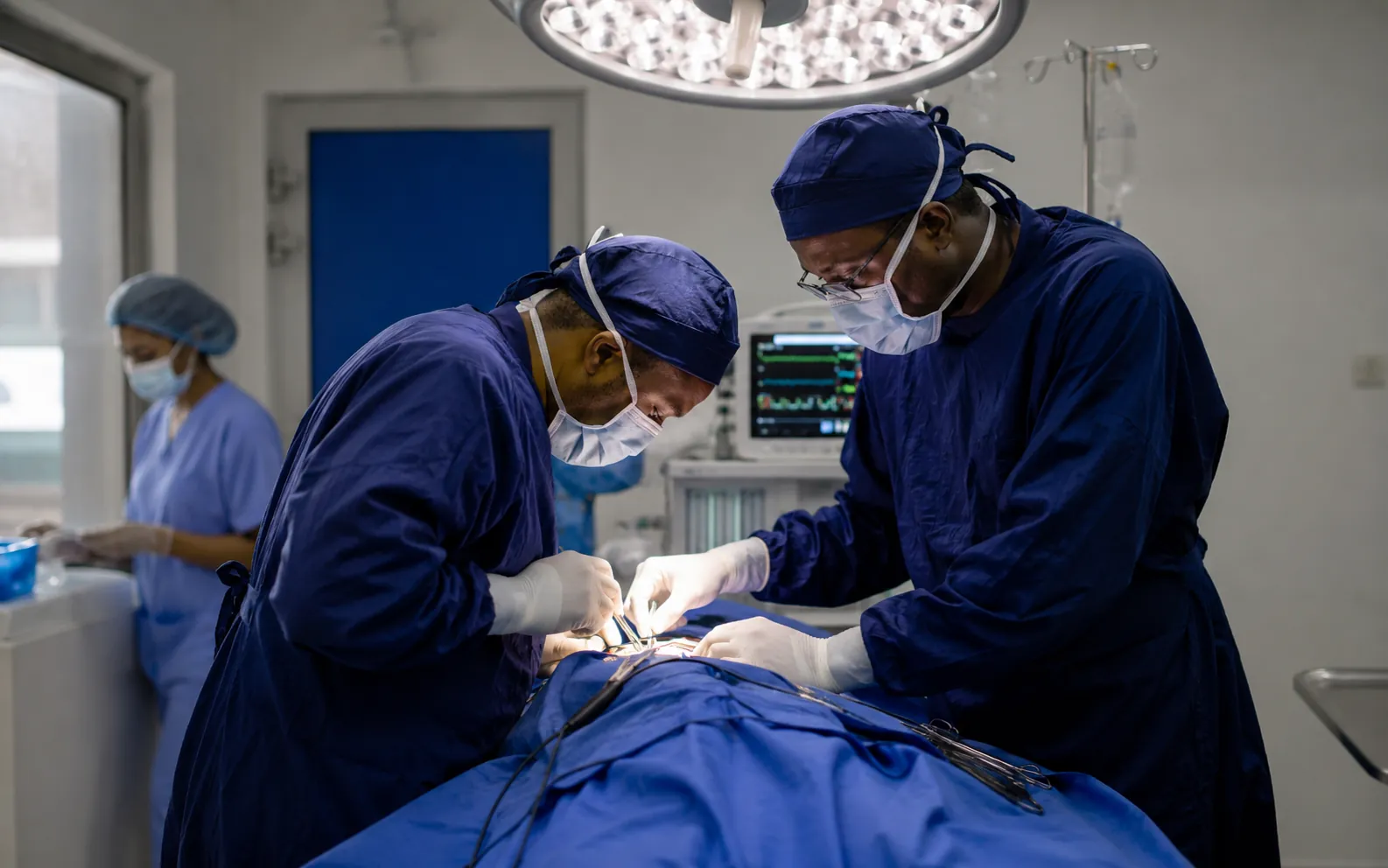
Being told that you need an operation can bring up practical questions very quickly. Which tests are necessary? When should you stop eating? Should you take your regular medicine? Will you need blood? How long will you remain in hospital?
The answers depend on the operation, the type of anaesthesia and your health. This guide explains the usual steps in a Nigerian hospital and the information your surgical team needs from you. Your own surgeon and anaesthetist may give different instructions for a good clinical reason, so their directions take priority.
Step 1: understand the proposed operation
Before agreeing to surgery, you should know the diagnosis, the purpose of the operation, the expected benefit, important risks, reasonable alternatives and what may happen if you decide not to proceed. Ask whether the operation is open, laparoscopic or another technique, what type of anaesthesia is planned, and whether the plan could change during the procedure.
Consent is a conversation, not only a signature. Use plain questions until the explanation is clear. It is reasonable to ask who will perform the procedure, how long it usually takes, how much pain and recovery time to expect, and which costs may arise before or after admission.
Step 2: attend the pre-operative assessment
The assessment helps the team identify risks early and plan your anaesthesia, surgery and recovery. Bring a complete account of your medical history, including:
- All medical conditions, previous operations and any problem with anaesthesia
- Medicine, food, latex, plaster or antiseptic allergies
- Bleeding problems, blood clots or previous blood transfusions
- Pregnancy or the possibility of pregnancy
- Smoking, alcohol use and any recent infection, fever, cough or dental problem
- Every prescription medicine, over-the-counter product, vitamin and herbal preparation you use
Tests are selected according to your age, health and procedure. They may include a full blood count, kidney function, blood glucose, clotting tests, urine tests, an electrocardiogram, a chest assessment or imaging. Not every patient needs every test. A test is useful when its result could change the plan or make the procedure safer.
Step 3: review medicines and herbal products
Do not stop or continue a medicine based on general internet advice. Ask the surgical or anaesthetic team for instructions that name the medicine and the last dose to take.
Medicines that need special planning can include blood thinners, diabetes medicines, insulin, some blood pressure medicines and medicines that affect stomach emptying. Herbal preparations and supplements also matter because some can affect bleeding, blood pressure, blood sugar or anaesthesia. Bring the packets or a written list showing the name, strength and dose.
If you accidentally take something you were told to stop, tell the team immediately. Hiding it is more dangerous than a possible delay.
Step 4: follow the exact fasting instruction
Fasting before anaesthesia is a safety measure. Food or liquid in the stomach can come back up and enter the lungs while normal protective reflexes are reduced. This can cause a serious complication.
Your hospital should tell you when to stop solid food, milk and clear fluids. Follow that exact instruction because the timing may differ by procedure, anaesthetic plan and medical history. Do not assume that every operation requires fasting from midnight, and do not extend the fast unnecessarily. If the instruction is unclear, call the hospital before the day of surgery.
Tell the team if you ate, drank, chewed gum or smoked after the stated time. The anaesthetist needs accurate information to decide whether it is safe to proceed.
Step 5: know why blood tests and cross-matching may be requested
A blood group test identifies your ABO and rhesus type. A cross-match checks compatibility between your sample and blood that could be supplied if a transfusion becomes necessary. The likelihood of transfusion depends on the operation, your blood count and your medical condition.
Not every operation requires a donor or blood to be reserved. If the hospital asks about blood availability, ask whether it is a routine precaution or a specific clinical requirement, how many units may be needed, and how the blood is screened and supplied. Anaemia discovered before an elective operation may sometimes be treated first, depending on the cause and urgency.
Step 6: prepare for admission and the day of surgery
Confirm the arrival time, estimated length of stay, payment or HMO authorisation, and what personal items the hospital permits. Arrange for a responsible adult to take you home and stay with you if you are having day surgery or sedation.
Bring your identification, hospital records, test results, scan images, medicine list and any equipment the team requested. Leave jewellery and valuables at home. Follow instructions about bathing, hair removal, make-up, nail products, dentures and contact lenses. Do not shave the operation site unless the team specifically tells you to do so, because small skin cuts can increase infection risk.
Before anaesthesia, the team should confirm your identity, the procedure, the correct site, allergies and key safety information. These repeated questions are deliberate checks, not a sign that the team has forgotten you.
The first 24 hours after surgery
In the recovery area, staff will monitor breathing, oxygen level, blood pressure, pulse, pain, nausea, the wound and any drains. Tell them when pain or nausea begins rather than waiting until it becomes severe.
You may be encouraged to take deep breaths, move your legs and get out of bed with assistance. Early movement, when the team says it is safe, can reduce chest complications and blood clots and can help the bowel recover. Do not stand for the first time without help.
Eating and drinking restart according to the procedure and your recovery from anaesthesia. Some patients can drink soon afterwards, while others need to wait. Follow the ward team's instructions.
Before discharge, get the plan in writing
Do not leave with only a bag of medicine. Make sure you understand:
- How to care for the wound, dressing, drain or stitches
- Which medicines to take, when to take them and which old medicines to restart
- What you may eat, lift, drive and do at work
- The date and purpose of the follow-up appointment
- When test or tissue results will be available
- Who to call during the day and at night if there is a problem
Return urgently for heavy bleeding, severe or increasing pain, difficulty breathing, chest pain, fainting, new confusion, persistent vomiting, a swollen painful leg, or a wound that is opening or producing pus. Contact the surgical team about fever, spreading redness or any symptom they specifically asked you to watch.
A final checklist
- I understand the operation, alternatives, important risks and expected recovery.
- The team knows my allergies, medical conditions and previous anaesthetic problems.
- I have written instructions for fasting and medicines.
- Required tests, payment or HMO authorisation and blood arrangements are complete.
- I know what to bring, when to arrive and who will take me home.
- I know the warning signs and how to contact the hospital after discharge.
For a surgical consultation or clarification about an operation planned at SkyHigh Medical Centre, call 0808 974 9877 or use the hospital's appointment request form.
If this describes your situation
Book a consultation at Magodo and bring previous results, scans and a current medication list where relevant. The hospital is open 24 hours.