
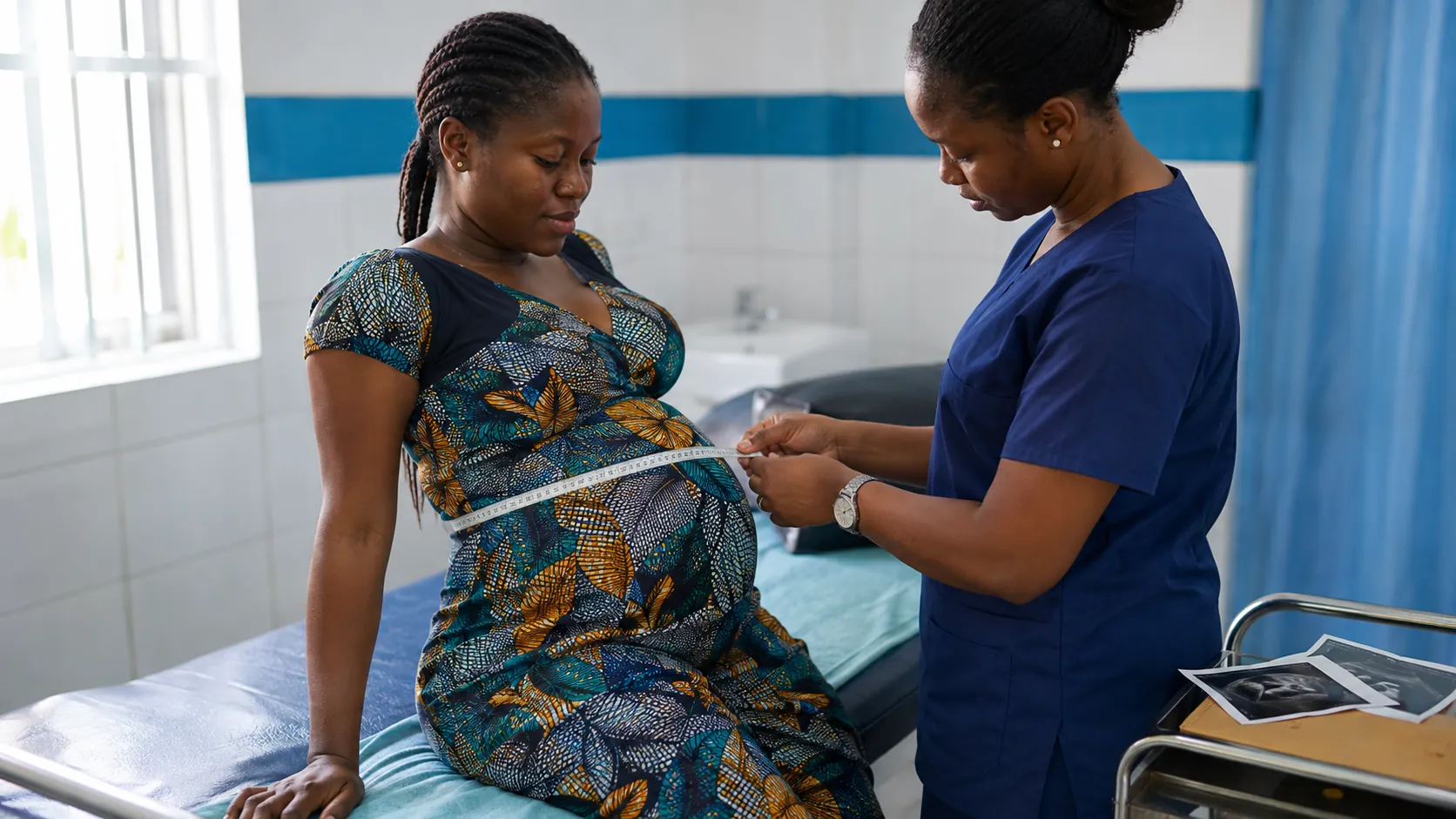
Most women in Lagos book antenatal care later than they should. Not out of carelessness, but because the first trimester is when you are least sure, least well, and most likely to be told by someone that there is no rush. There is a rush. Almost everything antenatal care can do to protect you and your baby works better the earlier it starts, and several things stop being possible at all after a certain number of weeks.
This guide sets out what antenatal care actually consists of in a Nigerian hospital, visit by visit, and what each test is looking for. It is written so that you can walk into your booking appointment already knowing what is going to happen.
When to book, and why before 12 weeks matters
The ideal booking window is between eight and twelve weeks of pregnancy. Three things depend on it.
The first is dating. An ultrasound in the first trimester dates a pregnancy to within a few days. The same scan at 30 weeks is accurate to within roughly three weeks, because babies grow at different rates later on. Accurate dating is what everything else is measured against: whether growth is normal, whether labour is preterm, whether a pregnancy is genuinely overdue. Get the date wrong at the start and every judgement afterwards is made against the wrong baseline.
The second is rhesus status. If you are rhesus negative and your baby is rhesus positive, your immune system can produce antibodies against the baby's blood. In a first pregnancy this usually causes no harm. In subsequent pregnancies it can be severe. It is entirely preventable with anti D immunoglobulin given at the right time, but only if your status is known early.
The third is everything that is easier to fix early than late. Anaemia, which is extremely common in Nigerian pregnancy, responds well to treatment started at 10 weeks and poorly to treatment started at 34. The same is true of raised blood pressure, of untreated infection, and of a genotype result that changes how the pregnancy is managed.
The booking visit
Your first antenatal visit is longer than every visit that follows, usually an hour or more. It is not a formality and it is not a queue for a card.
History. Your obstetrician will take a detailed medical, surgical, obstetric and family history. Previous pregnancies matter enormously, including miscarriages and terminations, and so do previous caesarean sections and what they were done for. Existing conditions such as hypertension, diabetes, sickle cell disease, thyroid disease or epilepsy change the plan substantially. So does every medication you take, including anything herbal, because some are unsafe in pregnancy and you will not be told that on the packet.
Examination. Height, weight, body mass index, blood pressure and a general physical examination establishing your baseline.
Dating scan. Confirming the pregnancy is in the uterus, that the heartbeat is present, how many babies there are, and the gestational age.
Booking bloods. The standard Nigerian antenatal panel is broad, and each test has a specific purpose.
- Blood group and rhesus status, for the reasons above and so that blood can be cross matched quickly if you ever need it.
- Packed cell volume or full blood count, to detect anaemia. Anaemia in pregnancy increases the risk of preterm birth, low birth weight, and death from bleeding at delivery, and it is the single most treatable risk factor in Nigerian obstetrics.
- Genotype, to establish whether you carry sickle cell trait or disease. If you carry the trait, your partner's genotype matters too.
- HIV screening, because transmission from mother to child is very largely preventable with treatment during pregnancy and delivery. This is the single strongest reason to test early.
- Hepatitis B and hepatitis C, both transmissible to the baby, and hepatitis B transmission is preventable with immunoglobulin and vaccination at birth.
- VDRL, screening for syphilis, which is treatable and causes serious harm if missed.
- Urinalysis, looking for protein, glucose and infection. Urinary infection in pregnancy is often symptomless and still causes preterm labour, which is why it is screened for rather than waited for.
- Malaria screening, since malaria in pregnancy causes anaemia in the mother and low birth weight in the baby.
The visit schedule
For a pregnancy with no complicating factors, the standard pattern in Nigeria is:
- Booking to 28 weeks: every four weeks
- 28 to 36 weeks: every two weeks
- 36 weeks to delivery: every week
Any pregnancy identified as higher risk moves onto a closer schedule. That includes previous caesarean section, raised blood pressure, diabetes or gestational diabetes, twins, previous preterm birth, previous stillbirth, significant anaemia, and maternal age above thirty five or below eighteen.
Every routine visit, however brief, checks four things: blood pressure, urine, the size of the uterus against the expected dates, and the baby's heartbeat. From around 36 weeks the baby's position is also checked, because a baby lying breech or transverse at term changes the delivery plan.
The scans that matter
Dating scan, 8 to 12 weeks. Confirms viability, number of babies and gestational age.
Anomaly scan, 18 to 22 weeks. This is the detailed one. It examines the baby's brain, spine, heart, abdominal wall, kidneys, limbs and facial structures, and checks the position of the placenta and the volume of amniotic fluid. It is the scan that detects structural abnormality at a stage where planning is still possible, and it cannot be done meaningfully outside that window. If you attend only one scan in the whole pregnancy, this is the one.
Growth scans, third trimester. Performed where there is a reason: a uterus measuring small or large for dates, hypertension, diabetes, twins, reduced fetal movements or a previous small baby. They estimate the baby's weight, check the fluid, and assess blood flow in the umbilical cord.
What you are given during pregnancy, and why
Haematinics. Iron and folic acid, given to prevent and treat anaemia. Folic acid also reduces the risk of neural tube defects and is ideally started before conception. Iron commonly causes constipation and darkens the stool, which is expected and not a reason to stop.
Tetanus toxoid. Given to protect the newborn against neonatal tetanus, which remains a real cause of newborn death in Nigeria and is entirely preventable by immunising the mother.
Intermittent preventive treatment for malaria. Sulfadoxine pyrimethamine given in the second and third trimesters under the national protocol, alongside an insecticide treated net. Malaria in pregnancy is frequently symptomless and still damages the placenta.
Calcium supplementation, where indicated, to reduce the risk of pre eclampsia.
The warning signs to act on immediately
Between appointments, go to the hospital straight away, at any hour, if you experience any of the following.
- Bleeding from the vagina at any stage
- Severe headache, blurred vision or flashing lights, particularly with swelling of the face or hands, which together suggest pre eclampsia
- Severe pain in the upper abdomen
- A clear reduction in the baby's movements after 28 weeks
- Fluid leaking from the vagina
- Regular painful contractions before 37 weeks
- Fever, or burning on passing urine
- Persistent vomiting with inability to keep fluids down
None of these should wait for your next appointment. A hospital that is open 24 hours exists precisely for this.
Your birth plan
By around 36 weeks you should have discussed and agreed a birth plan with your obstetrician. It covers the intended mode of delivery, what would change it, your preferences for pain relief, who will be with you, and what happens in the situations that are foreseeable in your specific case.
A birth plan is not a contract with the pregnancy. Labour makes its own decisions. What the plan does is ensure that when a decision has to be made quickly, it is being made by people who already know your history and have already discussed the options with you, rather than being explained for the first time in the middle of an emergency.
What to ask at your booking visit
- What is my rhesus status, and if I am negative, when will I need anti D?
- What is my packed cell volume, and is it acceptable for this stage?
- What is my genotype, and does my partner need testing?
- Based on my history, is this pregnancy considered high risk, and why?
- Who will be present at my delivery, and what happens if my obstetrician is unavailable?
- Is theatre available on site at all hours, and what is the process if a caesarean section becomes necessary at night?
- What does my HMO cover for maternity, and is there a waiting period?
A hospital that answers these directly is a hospital worth booking with.
If this describes your situation
Book a consultation at Magodo and bring previous results, scans and a current medication list where relevant. The hospital is open 24 hours.