
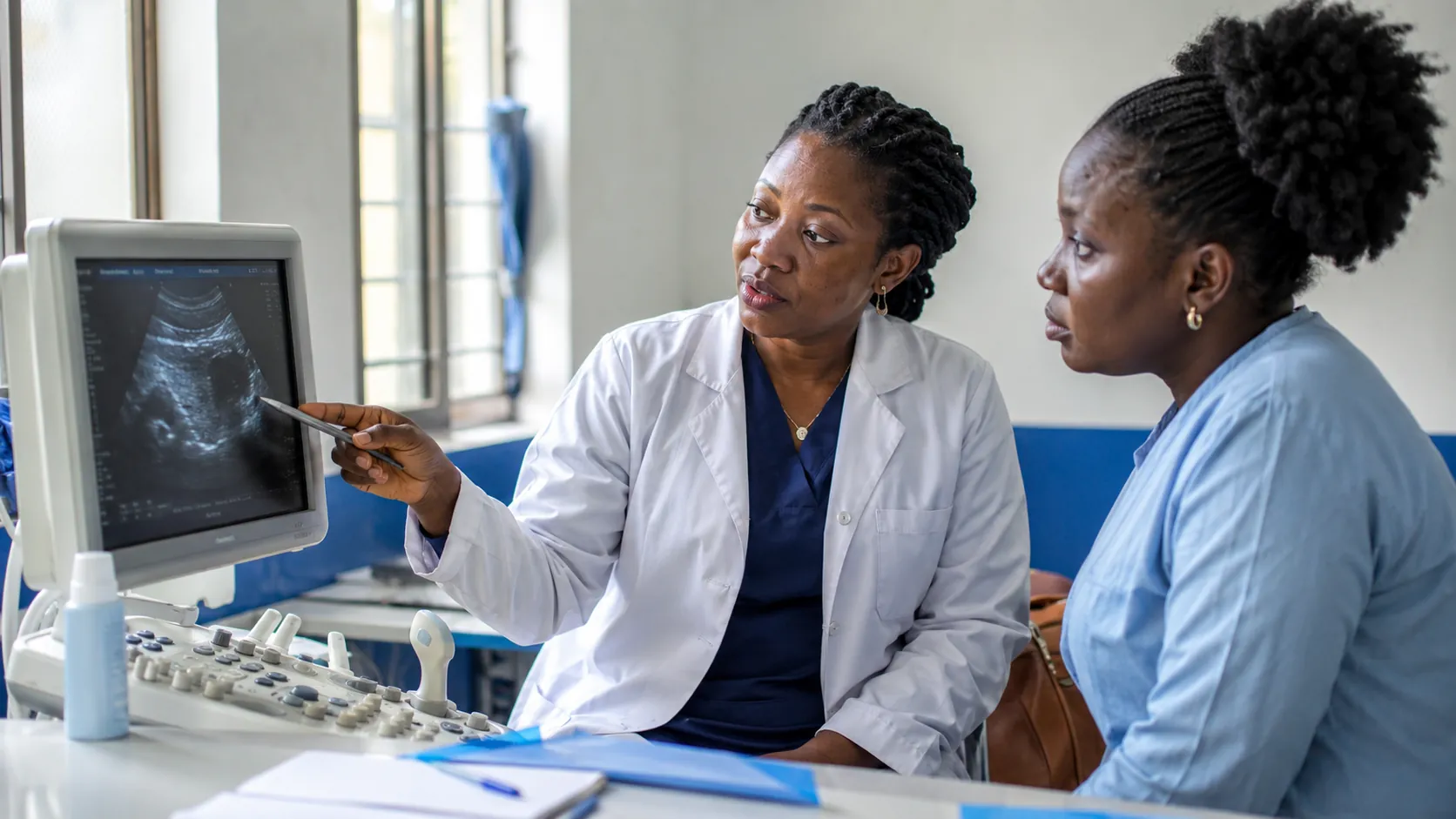
A great many Nigerian women are told they have fibroids after a routine scan and immediately assume an operation is coming. For most of them it is not. Fibroids are benign growths of the muscular wall of the uterus, they are extraordinarily common among women of African descent, and the majority cause no symptoms and require nothing beyond periodic review.
The decision to operate is driven by symptoms and by fertility plans. It is not driven by the existence of a fibroid on a report, and it is not driven by size alone.
What fibroids are, and where they sit
Fibroids, also called uterine leiomyomas, grow from the smooth muscle of the uterus. They are hormonally responsive, which is why they tend to grow through the reproductive years and often shrink after menopause. They are not cancer and they very rarely become cancer.
Where a fibroid sits matters much more than how large it is.
- Submucosal fibroids bulge into the cavity of the uterus. These are the ones most associated with heavy bleeding, with difficulty conceiving and with recurrent miscarriage, and a small submucosal fibroid can cause far more trouble than a large one elsewhere.
- Intramural fibroids sit within the muscular wall. They are the most common type and cause bleeding and bulk symptoms as they grow.
- Subserosal fibroids project outward from the surface. They tend to cause pressure symptoms rather than bleeding, pressing on the bladder or bowel.
- Pedunculated fibroids hang on a stalk and can twist, which causes sudden severe pain.
The symptoms that actually justify surgery
Heavy menstrual bleeding causing anaemia. This is the strongest single indication. Bleeding heavy enough to soak through protection hourly, to pass large clots, to last beyond seven days, or to leave you breathless and exhausted from a low packed cell volume, is not something to endure. Many Nigerian women have normalised bleeding that has been quietly making them anaemic for years.
Pressure symptoms. A fibroid uterus large enough to press on the bladder causes urinary frequency and a feeling of incomplete emptying. Pressure on the bowel causes constipation. Pressure on the ureters can, uncommonly, affect the kidneys, which is a clear indication to intervene.
Pain that is not controlled. Persistent pelvic pain, pain during intercourse, or the acute pain of a degenerating or twisting fibroid.
Fertility and pregnancy loss. Where fibroids distort the uterine cavity, they interfere with implantation and are associated with recurrent miscarriage. This is the indication where removal frequently produces a clear benefit.
Rapid growth. Uncommon, and it warrants investigation rather than automatic surgery, but it does change the conversation.
What does not, on its own, justify surgery
A fibroid found incidentally on a scan in a woman with no symptoms. A fibroid that has been stable for years. Size alone, in the absence of symptoms or pressure effects. And a fibroid discovered during a routine antenatal scan, which is usually managed conservatively through the pregnancy rather than operated on.
If you have been advised to have surgery and you have none of the indications above, it is entirely reasonable to seek a second opinion. A good obstetrician will not be offended by that.
What the assessment involves
Before any decision, you need a proper picture. That means a pelvic ultrasound mapping the number, size and position of the fibroids, a full blood count or packed cell volume to see whether you are anaemic, and a careful history of the bleeding pattern.
Other causes of the same symptoms have to be excluded, because fibroids and adenomyosis, endometrial polyps, hormonal disturbance and thyroid disease can all cause heavy bleeding, and finding a fibroid does not prove it is the culprit. Where fertility is the issue, tubal assessment and your partner's semen analysis belong in the same workup, because operating on a fibroid while a male factor goes undiagnosed wastes a year.
Non surgical options
Not every fibroid needs a theatre.
- Tranexamic acid taken during the period substantially reduces blood loss and does not affect fertility.
- Non steroidal anti inflammatories reduce both bleeding and pain.
- Hormonal treatments, including the levonorgestrel intrauterine system, control bleeding well in selected cases, though a distorted cavity limits their use.
- GnRH analogues shrink fibroids temporarily and are mainly used before surgery to reduce size and correct anaemia, not as a long term answer.
- Iron replacement, which treats the anaemia while the underlying decision is being made.
A note on the many herbal fibroid remedies advertised across Nigeria. There is no reliable evidence that any of them dissolves fibroids, several contain substances toxic to the liver or kidneys, and the real harm is the months of delay while symptoms and anaemia worsen. If you are taking something, tell your doctor. You will not be judged, but the interaction risk is real.
Myomectomy: removing the fibroids, keeping the uterus
Myomectomy removes fibroids and leaves the uterus in place. It is the operation for a woman who wants to conceive, and for any woman who wishes to keep her uterus.
It is performed in three ways. Open myomectomy, through an abdominal incision, which suits large or numerous fibroids. Laparoscopic myomectomy, through small incisions, which offers faster recovery but is limited by the number and position of the fibroids. Hysteroscopic myomectomy, through the cervix with no incision at all, which is the right approach for submucosal fibroids and has the quickest recovery of the three.
You must understand two things before consenting. First, fibroids can recur, because myomectomy removes the fibroids present, not the tendency to form them. Second, the operation leaves a scar in the uterine wall, and depending on how deep the removal went, that scar may mean a future delivery is planned as a caesarean section. Your surgeon should tell you which applies to you before the operation, not after.
Hysterectomy
Hysterectomy removes the uterus and is definitive. Fibroids cannot recur. It is appropriate for women who have completed their families, who have severe symptoms, or who have had recurrence after previous myomectomy.
It ends fertility permanently, which is why the conversation has to be unhurried and honest. Where the ovaries are conserved, and they usually are in younger women, hormone production continues and menopause is not brought forward.
Recovery, realistically
After open myomectomy, expect two to three nights in hospital, four to six weeks before returning to full activity, and a wound that needs care. After laparoscopic myomectomy, usually one to two nights and two to three weeks. After hysteroscopic myomectomy, often the same day and a few days of light activity.
Where conception is planned, most surgeons advise waiting three to six months after the operation to allow the uterine scar to heal properly. Your surgeon will give you a specific interval based on what was actually done.
Questions to take to your consultation
- How many fibroids are there, how large, and where exactly are they sitting?
- Which specific symptom is this surgery intended to fix?
- What is my packed cell volume, and should the anaemia be corrected before any operation?
- Have other causes of my bleeding been excluded?
- Which approach is planned, and what would cause you to convert to open surgery during the operation?
- Will this leave a scar that affects how I deliver in future?
- What is the realistic chance of recurrence in my case?
- What happens if I choose to do nothing for now?
That last question is the one most worth asking. A surgeon who can answer it calmly is one you can trust with the answer to the others.
If this describes your situation
Book a consultation at Magodo and bring previous results, scans and a current medication list where relevant. The hospital is open 24 hours.