
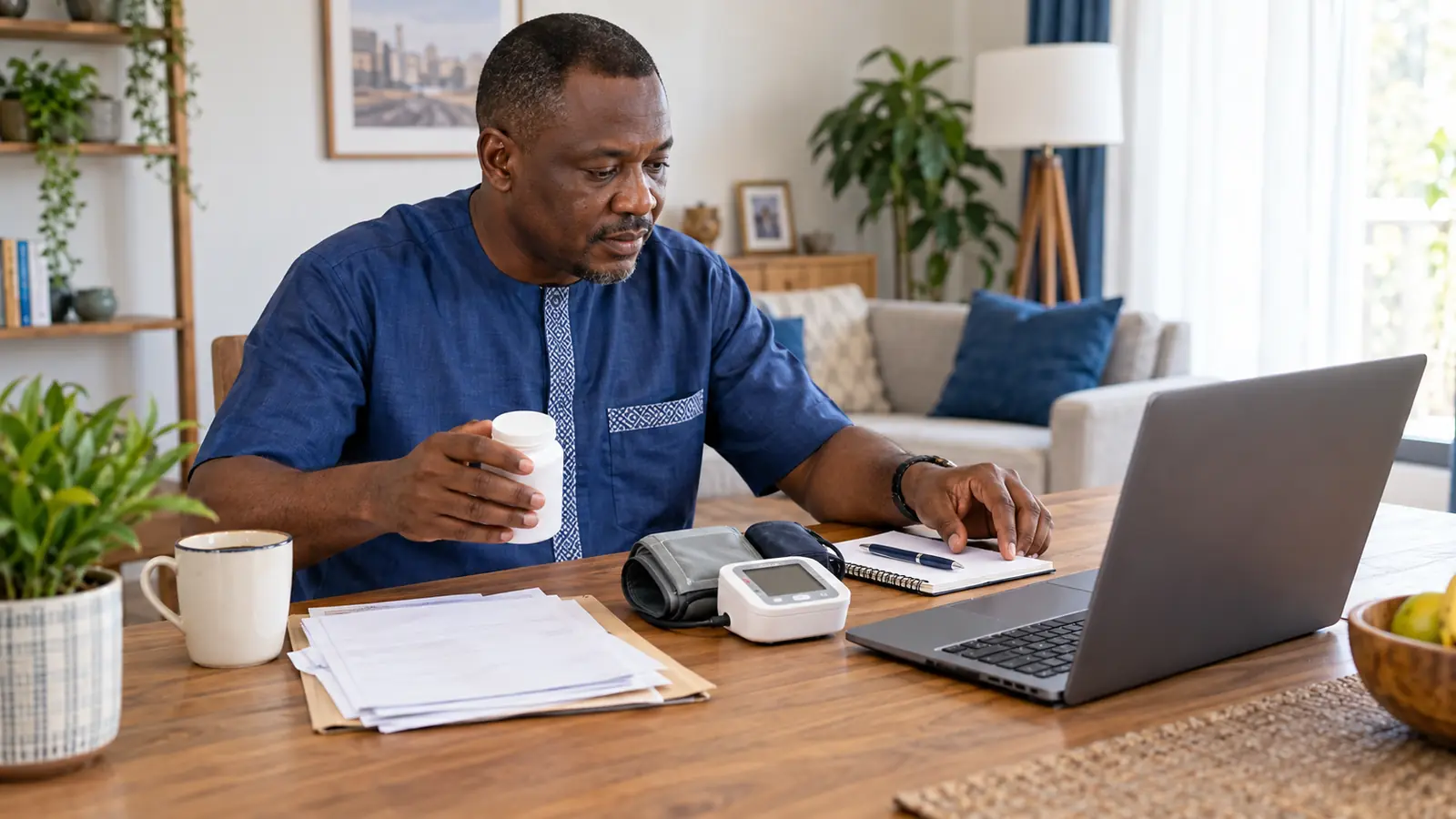
A good online doctor consultation starts before the call. A few minutes of preparation can give the clinician a clearer picture, reduce repeated questions and help you leave with a practical plan.
You do not need specialist equipment. What matters most is accurate information, a suitable place to speak and a device that works well enough for a clear conversation.
Write down the main reason for the appointment
Try to describe the concern in one or two sentences before the consultation. Include when it started, whether it is improving or worsening and what you have already tried. If several things are worrying you, list them in order of importance.
This does not replace the clinician's questions. It simply keeps the most important issue from being lost during the conversation.
Gather your health information
Keep relevant documents close enough to read or show on camera. Depending on the reason for your consultation, this may include:
- Recent laboratory or imaging results
- A discharge summary or previous treatment plan
- The name and date of an earlier diagnosis
- A list of allergies and previous medicine reactions
- Your HMO details if you plan to use health insurance
If the clinic asks you to send documents before the appointment, use the contact method the team provides. Check that every page is readable and that your name appears on the report.
Make a complete medicine list
Write down every prescription medicine, over-the-counter product, vitamin, supplement and herbal product you currently use. Include the strength and how often you take it. If you do not know the name, keep the packet or bottle beside you so the clinician can see it.
Do not stop or change a prescribed medicine while waiting for the consultation unless a clinician has told you to do so.
Record useful measurements if you can
Home readings can be helpful when they are taken correctly. A clinician may ask for your temperature, blood pressure, blood glucose, pulse, weight or oxygen level, depending on the concern. Only share a measurement from a device you know how to use. Tell the clinician when you took it and whether you repeated it.
Do not delay care because you cannot take a reading. The consultation can still begin, and the clinician will tell you if a measurement or physical check is necessary.
Choose the right place and device
Use a quiet, private and well-lit place. Sit where your face can be seen clearly and avoid a bright window directly behind you. Charge your phone or computer, check the camera and microphone, and keep the charger nearby.
A stable internet connection is best for video. If video is not clear enough, the clinician may continue by phone. Keep your phone number available to the team and answer calls around the agreed time.
Prepare to show the problem safely
For a visible concern, good light and a steady camera help. Wear clothing that allows you to show the area without compromising your privacy. A family member can help hold the device if you are comfortable with that.
Some problems cannot be assessed reliably through a camera. The clinician may arrange a physical examination instead of making a decision from an unclear image.
Decide who should join you
A parent or legal guardian should be present for a child's consultation. An adult patient may also choose to have a trusted relative or caregiver present, especially when they help manage medicines or remember previous treatment.
Tell the clinician who is in the room. The consultation is confidential, so everyone present should have the patient's permission unless the patient is a child or needs support making decisions.
Keep a short question list
Useful questions include:
- What do you think is the likely cause?
- Do I need any tests or an examination?
- What should I do next, and for how long?
- What warning signs mean I should seek urgent care?
- When should I arrange a follow-up?
Before the call ends, repeat the plan in your own words. This gives the clinician a chance to correct anything you misunderstood.
Know what happens after the consultation
The outcome may include advice, a prescription where clinically appropriate, a request for tests, a referral or an in-person review. Ask how you will receive any documents and who to contact if you have a question about the plan.
Your requested time remains a preference until the team confirms it. If your symptoms become severe or urgent before the appointment, use an emergency service rather than waiting for the call.
Book an online consultation in Lagos
To request a SkyHigh Telemedicine consultation, complete the two-step form with a short reason, preferred date and time, payment method and contact details. Email is optional. The team will contact you by phone or WhatsApp to confirm the appointment and explain what to send beforehand.
Request an online doctor consultation or call 0808 974 9877.
Would an online consultation suit you?
Send a Telemedicine request for selected non-emergency concerns. The team will confirm whether an online consultation is appropriate, the time and the payment details.