
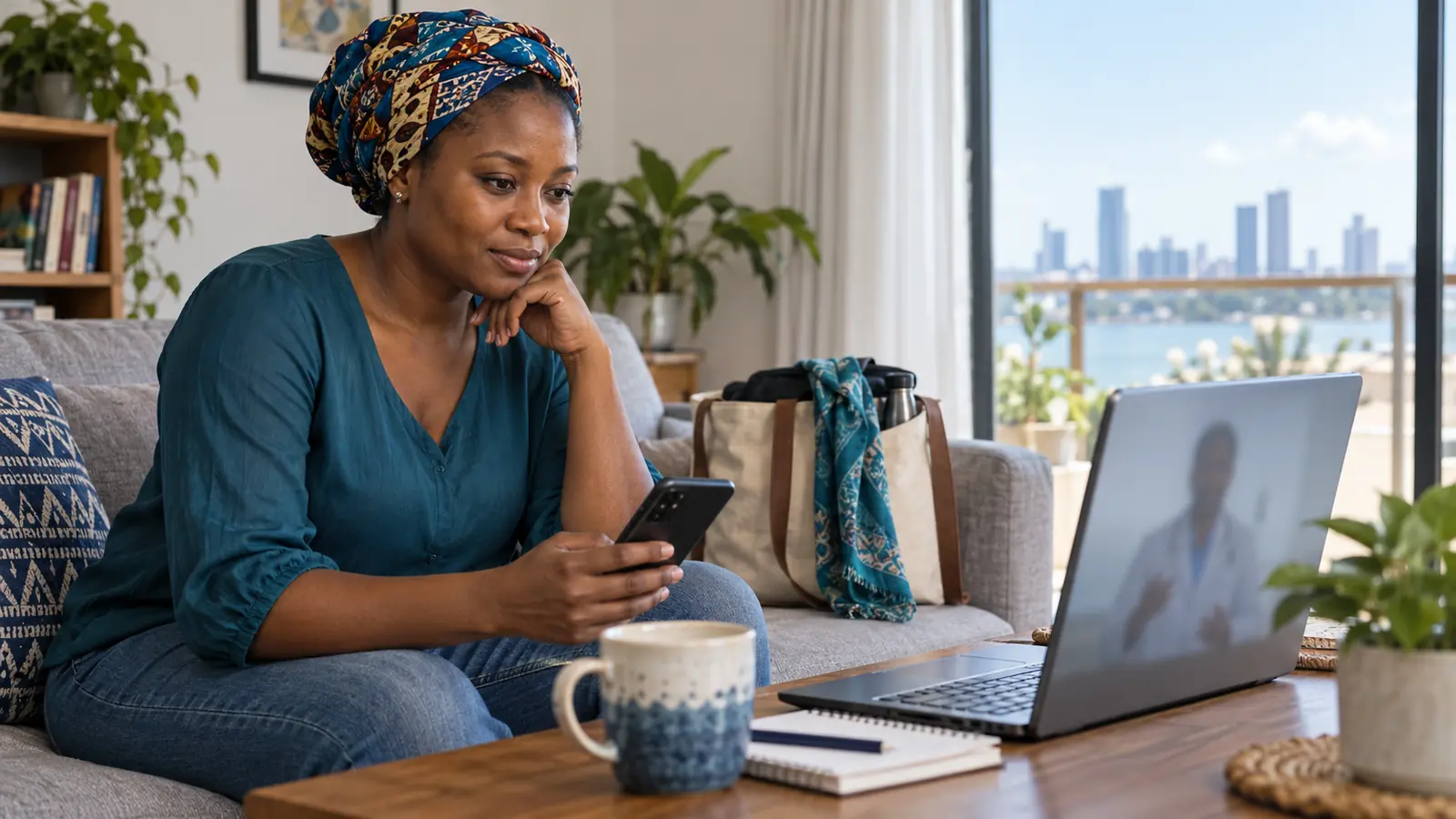
Telemedicine gives you a way to speak with a clinician without travelling to the hospital. It can save time, make follow-up care easier and help you decide what to do next. It does not replace every hospital visit. The safest choice depends on your symptoms, what the clinician needs to assess and whether a physical examination or test could change the decision.
A useful starting question is simple: can the concern be understood mainly through a conversation and information that can be shared clearly on screen? If the answer is yes, an online doctor consultation may be a good first step. If the clinician needs to touch, listen to or closely examine part of your body, an in-person visit is usually more useful.
When Telemedicine is often a useful first step
Remote consultations are especially helpful when your medical history is already known or when the main purpose is to review information. Common examples include:
- Following up after an earlier consultation, admission or procedure
- Reviewing laboratory or imaging results
- Discussing how you are responding to a treatment plan
- Reviewing medicines for a stable long-term condition
- Asking whether a non-urgent concern needs a hospital examination
- Seeking a second opinion when you can share your reports in advance
Telemedicine can also reduce an unnecessary journey when you only need clarification. For example, a clinician may be able to explain a result, answer questions about side effects or advise which service you should book next.
When a hospital visit is usually better
A video call gives the clinician more information than a phone call, but neither can replace a complete physical examination. You are more likely to need an in-person visit when:
- You have a new symptom that cannot be described or shown clearly
- Your abdomen, chest, ear, throat, wound, lump or joint needs to be examined
- Vital signs such as blood pressure, oxygen level or temperature need to be checked
- You may need blood tests, imaging or a procedure
- A child looks acutely unwell or is difficult to assess on camera
- Pregnancy symptoms require monitoring or examination
- Your symptoms are becoming worse despite treatment
You can still begin online if you are unsure. The clinician may decide that the next safe step is a hospital appointment and explain what service you need. That is not a failed online consultation. It is a clinical decision based on the information available.
Symptoms that should not wait for Telemedicine
Telemedicine is not an emergency service. Go to an emergency department or call the hospital immediately for chest pain, severe difficulty breathing, heavy bleeding, loss of consciousness, a seizure, sudden weakness on one side, severe sudden pain, serious injury or any rapidly worsening symptom.
Babies, older adults, pregnant patients and people with serious long-term conditions can become unwell quickly. When something feels urgent, use an emergency service rather than waiting for a scheduled online appointment.
A quick decision checklist
Before choosing the consultation type, ask yourself these questions:
- Is it urgent? If yes, seek emergency care.
- Will the doctor need to examine me? If likely, choose an in-person visit.
- Do I mainly need a review or explanation? Telemedicine may work well.
- Can I share the necessary information? Have results, medicine names and readings ready.
- Can I speak privately with a reliable connection? This helps the consultation remain clear and confidential.
What happens if the clinician changes the plan
During an online consultation, the clinician may ask more questions, request a clearer view on camera or review documents you sent beforehand. The outcome may be advice, a treatment plan, a prescription where clinically appropriate, a request for tests or an in-person review.
Your preferred consultation time is not confirmed until the care team contacts you. If your concern changes or becomes urgent while you are waiting, do not wait for the online appointment.
Requesting Telemedicine at SkyHigh Medical Centre
SkyHigh Medical Centre coordinates Telemedicine consultations through its Magodo team for selected non-emergency concerns. You can submit the short request form, state what the consultation is for and choose a preferred date and time. The team will contact you to confirm whether Telemedicine is suitable, the appointment details and payment information.
Request a Telemedicine consultation or call 0808 974 9877 if you would prefer to speak with the team first.
Would an online consultation suit you?
Send a Telemedicine request for selected non-emergency concerns. The team will confirm whether an online consultation is appropriate, the time and the payment details.